
Iceland vs Norway: Growth and Stability in Nordic Investing
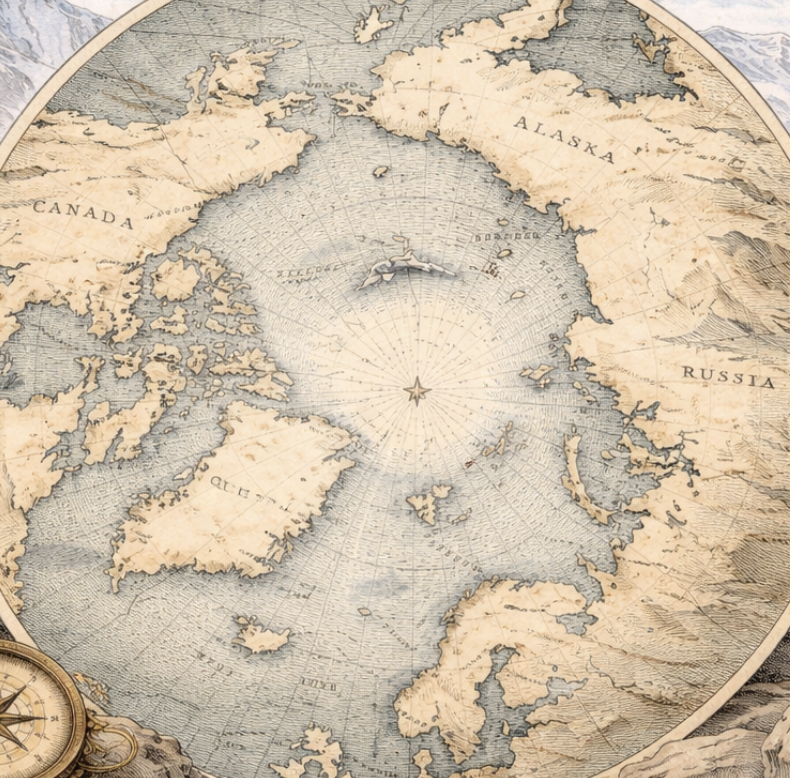

Situated in the Nordic region, both Norway and Iceland provide unique investment opportunities to U.S. investors. With both countries ranking among the world’s wealthiest economies per capita, Norway and Iceland differ on their size, GDP growth, economic stability and sector exposure. For example, Norway’s economy has historically been driven by oil, gas, and its sovereign wealth fund while Iceland has built an economy centered around renewable energy, tourism, fisheries, and technology.
Understanding the differences between the economies of Norway and Iceland is essential for investors interested in exposure through Iceland or Nordic ETFs.
Economic Size
Norway’s economy is significantly larger than Iceland’s, with a total GDP of approximately $599.4 billion compared to Iceland’s $43.8 billion. However, Iceland’s maintains a higher GDP per capita. According to the International Monetary Fund, Iceland’s GDP per capita is $110,048, compared to Norway’s $105,877.
Due to Iceland’s smaller size, its economic structure is much more concentrated, with key sectors including renewable energy, tourism, fisheries, and financial services. As a result of its size, Iceland can experience faster percentage-based growth during expansions, but also greater volatility during downturns.
GDP Growth
Recent OECD forecasts show Iceland rebounding faster than many developed economies. The OECD projects Iceland’s GDP growth at approximately 1.4% in 2025 and 2.8% in 2026, driven by stronger household consumption and export recovery.
Norway’s GDP is projected to grow around 1.7% in 2025 and 1.9% in 2026. However, in recent decades OECD analysts note that Norway’s long-term productivity growth has slowed, which has been partly attributed to structural challenges outside its petroleum sector.
Energy: Oil vs Renewable Energy
One of the biggest differences between Norway and Iceland is energy. Norway relies heavily on oil and gas production, even while investing heavily in renewable energy through its sovereign wealth fund. Reuters reported that Norway’s sovereign fund committed approximately $1 billion to renewable energy infrastructure investments in Europe and other developed markets.
Iceland operates almost entirely on renewable electricity, primarily geothermal and hydropower. This gives Iceland some of the lowest industrial energy costs in Europe and positions the country favorably for energy-intensive industries such as data centers and green manufacturing.
For ESG-focused investors, this is a critical distinction. While Norway is currently transitioning from fossil fuel wealth toward greener investments, Iceland already operates as one of the world’s most renewable-powered economies.
Economic Stability
Norway’s economy benefits from large financial reserves. For example, its sovereign wealth fund acts as a stabilizer during global downturns and provides fiscal flexibility few nations possess. Discussions around the fund frequently highlight that it owns roughly 1.5% of all publicly traded companies globally.
Iceland’s economy is smaller and historically more volatile, particularly after the 2008 financial crisis. However, since the crisis, Iceland has rebuilt its banking system, strengthened fiscal discipline, and diversified its economy.
Iceland and Norway’s Investment Exposure
Both Iceland and Norway invest in similar industries, however, there are slight distinctions.
Investing in Norway provides exposure to:
Energy companies
Shipping
Industrials
Financials
Global sovereign wealth assets
Investing in Iceland provides exposure to:
Renewable-energy-linked industries
Fisheries and seafood exports
Tourism infrastructure
Regional banks
Consumer and industrial companies tied to domestic growth
Conclusion
For U.S. investors, deciding between investing in Iceland or investing in Norway ultimately comes down to growth potential vs. stability. Both economies represent attractive opportunities yet serve different investment objectives. While Norway’s economy is substantially larger and offers a greater degree of stability, Iceland offers a smaller, more agile economy powered entirely by renewable energy. Iceland is also positioned to benefit from long-term global trends in sustainability, clean energy, and green infrastructure while Norway is still reliant on oil and gas.
Iceland’s combination of renewable-energy leadership, economic flexibility, and high-growth potential has made Iceland increasingly attractive to investors seeking alternatives to traditional Nordic ETFs.


I enjoyed this balanced comparison of Iceland and Norway as investment destinations. Evaluating both growth potential and long-term stability helps investors make better strategic decisions. Professionals seeking to deepen their expertise may also benefit from a highly regarded strategic governance course & workshop for managers in Oslo, Norway to strengthen governance and long-term organizational decision-making. Thank you for sharing this insightful analysis.
Appreciating this thoughtful comparison of Iceland and Norway as investment destinations. The discussion does a great job of highlighting how growth opportunities and economic stability can coexist in different ways across the Nordic region. By examining the strengths of both countries, readers gain a better understanding of how governance, resource management, and long-term planning influence investment attractiveness. This topic aligns closely with concepts explored in a strategic governance seminar & course for executives in Oslo, Norway, where professionals examine policy frameworks, risk oversight, and strategic decision-making that support sustainable economic development and investor confidence.