
The Tiny Country Quietly Beating Larger Economies
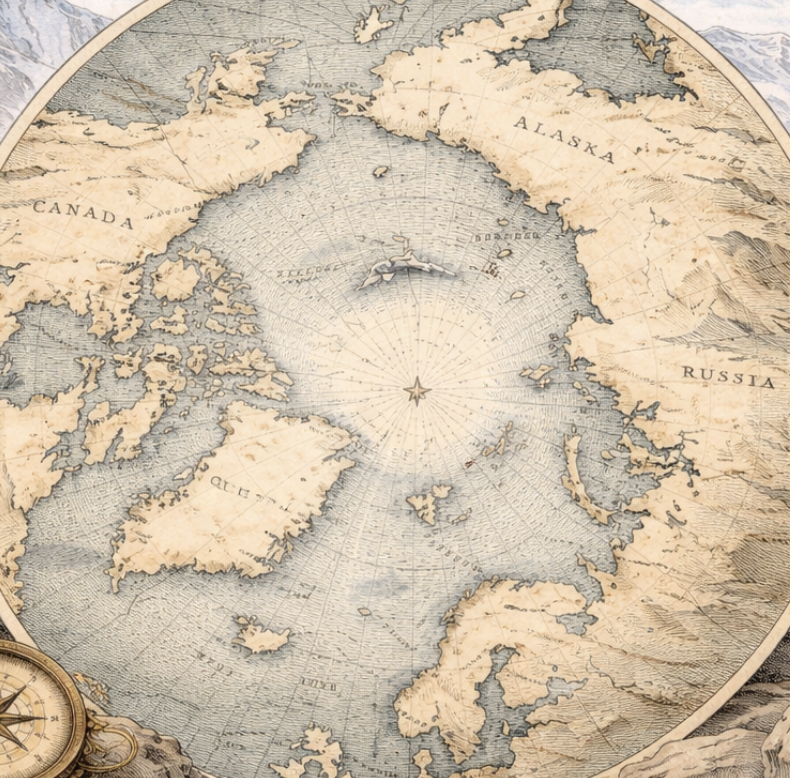

There is a small island nation in the North Atlantic with around 400,000 residents, a population smaller than many mid-sized American cities. It has no standing army, sits on top of active volcanoes, and spent most of its history fishing. Yet today, that same country ranks at the very top of the United Nations Human Development Index, consistently places among the wealthiest nations by GDP per capita, and has held the title of the world’s most peaceful country every year since 2008. That country is Iceland.
A Small Country with a Large Output
Despite having a population of about 400,000 people, Iceland consistently ranks among the top ten countries in the world, ahead of the United States, Germany, and every Nordic neighbor at approximately $110,048 GDP per capita in 2026.
At about $33 billion, the size of Iceland’s economy is relatively small compared to its peers, but its per person output consistently outpaces economies many times its size. According to the IMF, Iceland’s GDP growth rate in 2026 is 1.9%, and is projected to reach 3.6% in 2027, driven by strong consumer spending and a rebound of exports. Additionally, unemployment in 2025 was around 4.3%, well below the Nordic average of 6.2%.
Iceland’s Energy Foundation
A large part of Iceland's economic advantage comes from its rich natural resources. Iceland sits on the Mid-Atlantic Ridge, which means it has access to vast amounts of geothermal energy. Today, nearly 100% of Iceland's electricity grid runs on renewable sources, primarily geothermal and hydropower. Furthermore, about 85% of all homes in Iceland are heated directly with geothermal energy through district heating systems. The economic impact of this is hard to overstate. The Icelandic Ministry of Industries and Innovation has estimated that the annual macroeconomic benefits of the geothermal district heating system alone account for up to 7% of GDP or roughly $3,000 per person per year.
Iceland is also the world's largest electricity producer per capita, generating approximately 55,000 kWh per person per year. In comparison, the EU average is about 6,000kWh per person per year. This abundant, cheap electricity not only allows Iceland to be immune from global fossil fuel price shocks, but also attracts many energy intensive industries, like aluminum smelting and data centers, to the country.
How Iceland Recovered from Total Economic Collapse
Another unique aspect of Iceland’s history is how the country responded to a total financial collapse in 2008. In the years leading up to the global financial crisis, Iceland's three major banks — Glitnir, Kaupthing, and Landsbanki — had expanded recklessly. By the summer of 2008, the assets of those three banks corresponded to roughly ten times the size of Iceland's entire GDP. When the global financial crisis hit, all three collapsed in rapid succession, which was the third-largest bankruptcy in history at the time. Iceland's currency, the króna, lost roughly 50% of its value between 2007 and 2010, and the economy contracted by more than 6%.
Rather than bail out the banks with public money, which the approach taken by the United States and most of Europe, Iceland let them fail. It established new, smaller institutions in their place, imposed capital controls to stabilize the króna, and pursued criminal charges against the bank executives responsible.
The recovery was faster than almost anyone predicted. Iceland repaid its IMF loans ahead of schedule by 2012. GDP returned to pre-crisis levels by 2015. By 2017, unemployment had fallen back below 3%, and GDP was 15% above its 2007 peak. The financial sector, which had once accounted for 25% of GDP, was brought down to around 5%, a more proportionate share for an economy Iceland's size.Tourism, renewable energy, and technology sectors stepped in to fill the gap.
Tourism: The Economy's Other Economic Engine
In the wake of Iceland’s financial crisis, Iceland’s Eyjafjallajökull volcano erupted and forced the largest closure of European airspace since World War II. All eyes turned to Iceland as images of the country’s glaciers, black sand beaches, and lava fields circulated globally. The following year, Iceland saw a 19% increase in tourism, helping rebuild from one of the worst economic collapses in modern history and laying the foundation for what would become the one of the country's most important industries.
Today, Iceland attracts over two million tourists annually. In 2024, tourism accounted for approximately 8.7% of Iceland's GDP and accounts for about 40% of Iceland's total export income. Nearly one in ten hours worked in Iceland in 2024 was linked to the tourism sector.
Additionally, the sector has proven remarkably resilient after the COVID-19 collapse in 2020. Inbound tourism expenditure reached nearly 519 billion ISK in 2024, up 4.2% from the previous year. The natural landscape — glaciers, geysers, volcanic fields, the Northern Lights — continues to draw visitors willing to pay a premium for the experience, and Iceland's infrastructure has scaled accordingly.
The Numbers That Go Beyond Economics
The United Nations Development Program ranked Iceland first in the world on the Human Development Index in 2025, a composite measure of life expectancy, education, and income, with a score of 0.972, the highest recorded among 193 countries and territories. Iceland also topped the inequality-adjusted version of the index, meaning its development is broadly distributed rather than concentrated among a wealthy minority.
Additionally, the Institute for Economics and Peace ranked Iceland first on the Global Peace Index in 2024, out of 163 countries, a position it has held every year since 2008.The country maintains no standing military, relies on NATO membership for collective defense, and by most measures has one of the most stable and law-abiding societies on earth.
What This Actually Means
Iceland’s performance across economic, social, and quality-of-life metrics is not accidental. It represents a coherent model of a small, open economy with strong institutions, abundant natural resources, a diversified export base, an educated workforce, and a resilient economy. For most of modern history, Iceland was viewed as remote, resource-dependent, and economically insignificant. Today, it stands as one of the clearest examples of how stability, energy abundance, and effective governance can compound over time into national prosperity. This alone is causing many investors to invest in Iceland.
The world noticed Iceland after a volcanic eruption shut down European airspace in 2010. What many still have not noticed is how Iceland quietly became one of the most successful economies in the developed world.


Comments