
Why Arctic Economies Matter to Global Investors
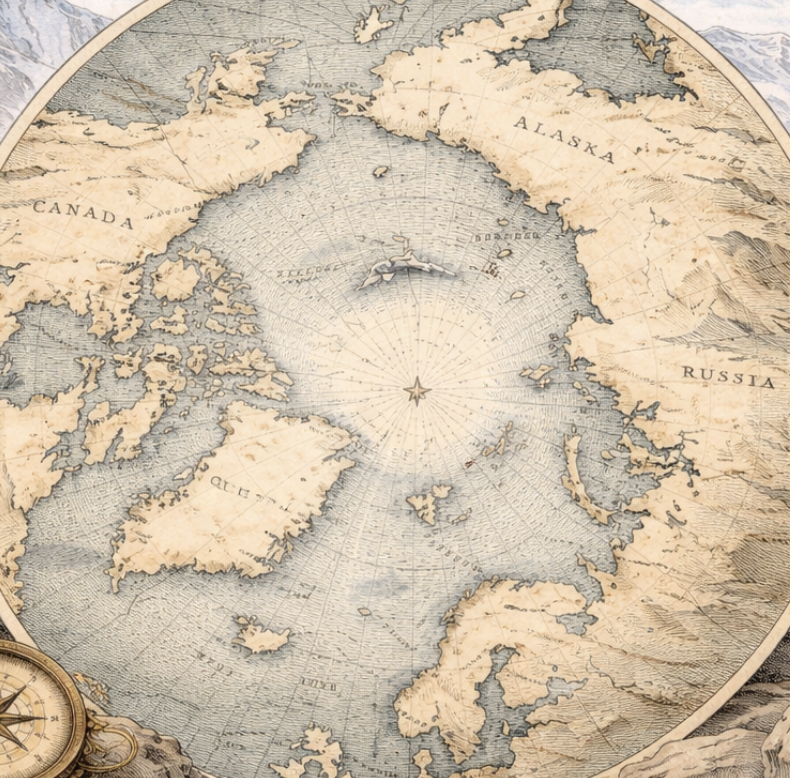

Arctic economies are becoming more relevant to global investors as natural resources, new sea routes, energy transition policies, and shifting trade dynamics reshape the global economy. While the Arctic region was once viewed primarily as remote and resource-dependent, countries connected to the Arctic are now attracting attention for their energy resources, renewable power potential, shipping routes, and growing geopolitical importance.
The Arctic's Natural Resources
One reason Arctic economies have become a major headline in recent years is the scale of natural resources located in the region. According to the U.S. Geological Survey, the Arctic may contain approximately 13% of the world’s undiscovered oil and 30% of its undiscovered natural gas reserves.
As a result, countries with Arctic exposure, including Norway, Iceland, Greenland, Canada, and other Nordic economies, play a strategic role in global energy markets. Norway, for example, has become one of Europe’s key energy suppliers in recent years as Europe sought alternatives to Russian energy exports. Greenland is also attracting more attention from investors because it has large deposits of critical minerals and rare earth elements used in electric vehicles, batteries, renewable energy, and defense technology. Although mining projects are difficult because of Greenland’s harsh climate and limited infrastructure, the region is drawing attention as the U.S. and Europe look for new sources of critical minerals outside of China.
New Arctic Shipping Routes
Additionally, melting sea ice is changing the importance of the Arctic through shipping and trade. As Arctic ice coverage declines, shipping routes like the Northern Sea Route could shorten transportation times between Europe and Asia as compared to traditional shipping lanes through the Suez Canal. The Arctic Council notes that Arctic shipping activity has increased by 40% and the number of ships in the Arctic reached a record high in 2025, as sea ice conditions change and infrastructure improves. Although these routes remain seasonal and politically sensitive, the changes in shipping routes affects Arctic infrastructure, ports, and logistics systems tied to future global trade patterns.
Renewable Energy Is Expanding Arctic Investment Opportunities
The Arctic region is not only important because of the high deposits of oil and gas. Several Arctic economies are becoming leaders in renewable energy and sustainability.
Iceland is one of the clearest examples. Iceland generates nearly all of its electricity from renewable sources, primarily hydropower and geothermal energy. The IEA Geothermal Association also notes that practically all stationary energy in Iceland comes from domestic renewable sources, with geothermal energy playing a major role in both electricity generation and heating.
Iceland’s renewable-energy advantage has helped attract many energy-intensive industries such as aluminum production and data centers, which benefit from stable renewable electricity and relatively low energy costs. As a result, Iceland’s renewable infrastructure has become central to its long-term economic identity and ESG appeal, causing many sustainability-focused investors to invest in Iceland.
Arctic Economies and the Global Energy Transition
The global shift toward cleaner energy is also increasing investor interest in the Arctic. The International Energy Agency projects that “in more than 80% of countries worldwide, renewable power capacity is set to grow faster between 2025 and 2030 than it did over the previous five-year period.” Renewable energy, therefore, will continue expanding rapidly as countries pursue decarbonization goals and energy security. Because several Arctic economies already possess large renewable-energy resources, including geothermal, hydropower, and wind, they are strategically positioned for the global energy transition.
For example, Iceland clearly shows how renewable energy can support an advanced modern economy. Iceland's electricity system is among the cleanest globally, while geothermal energy continues to play an expanding role in both heating and electricity generation. As a result, Iceland is positioned as a leader in the global energy transition and is one of seven countries that relies on nearly 100% clean electricity.
Geopolitical Importance in the Arctic
The Arctic is also becoming more important geopolitically. The United States, Russia, China, and NATO members are increasing their focus on Arctic security, trade access, energy resources, and infrastructure development. NATO has identified the Arctic as a strategically important region due to changing shipping lanes, military positioning, and resource competition.
For investors, geopolitical importance matters because it often drives long-term government spending on infrastructure, telecommunications, transportation systems, and energy development across Arctic-connected economies.
Investing in the Arctic
Arctic economies provide exposure to several major long-term investment trends including:
Energy security
Renewable energy transition
Infrastructure development
Strategic trade routes
ESG investing
Critical natural resources
Iceland and Norway also offer relatively stable political systems, developed financial institutions, and high-income populations compared to many other Arctic economies. This combination of stability, strategic relevance, and renewable-energy leadership show why investors are turning to invest in Arctic economies.
Conclusion
Arctic economies are no longer viewed simply as remote resource markets; rather, they are connected to some of the world’s most prominent long-term investment trends, including renewable energy, energy security, ESG investing, infrastructure development, and geopolitical strategy.
Countries like Iceland demonstrate how Arctic economies can combine renewable energy leadership with modern economic development, while Norway illustrates how natural resource wealth can be transformed into long-term financial and institutional strength. Together, they highlight why Arctic-linked economies are becoming more relevant in conversations around global investing and international diversification.


Comments